
Sign Up For Our E-Blast To Receive Information on our Books, Speech Therapy materials and our latest freebies!
Gardening at home, the classroom, and in speech
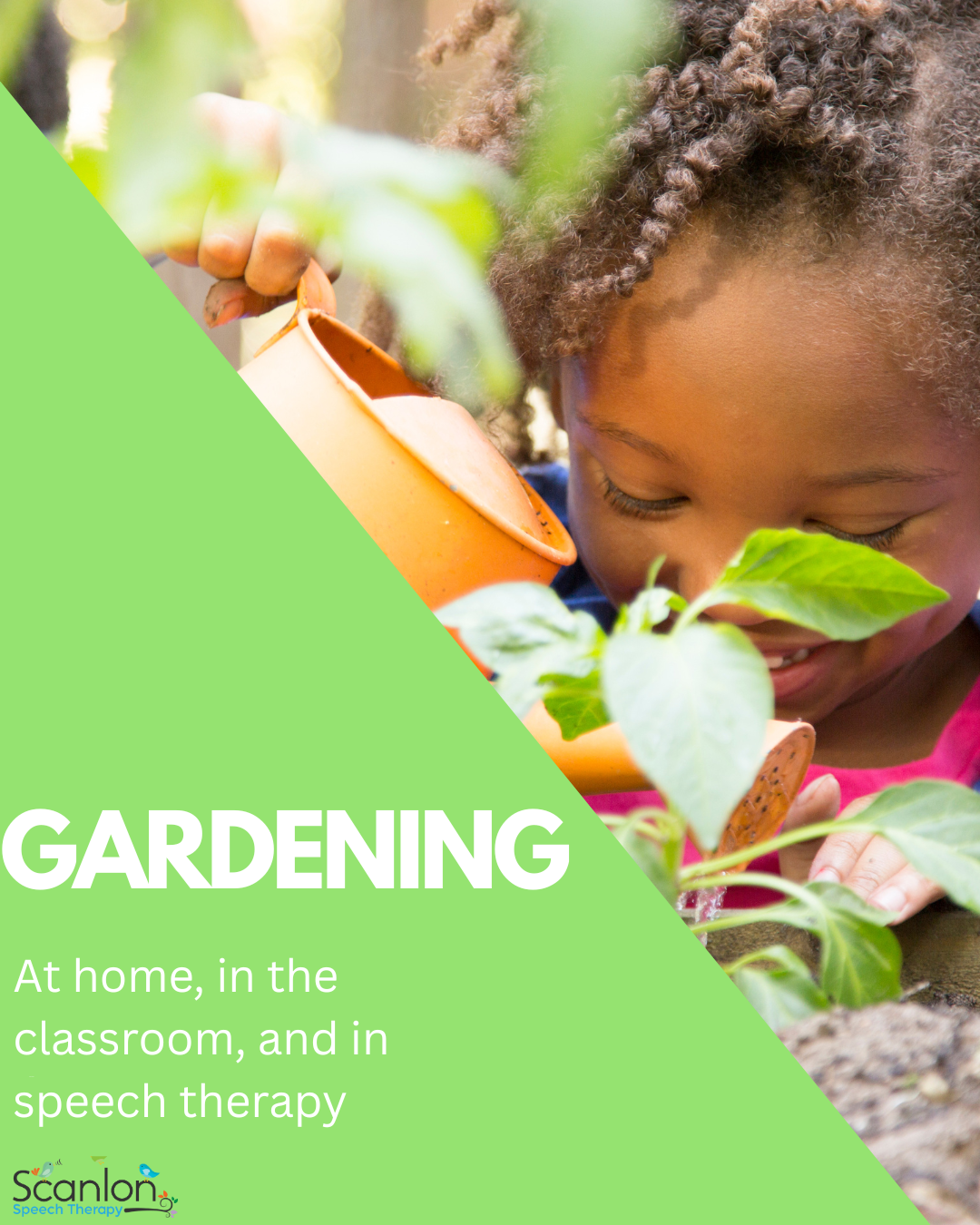
This past summer, a dear colleague inspired me to embark on a delightful journey into the world of container gardening on my deck. What began as a small endeavor quickly blossomed into a source of happiness. Each morning, the simple ritual of watering my plants and tending to their needs became a cherished part of my day. Witnessing their growth, the joy of harvest, and the immense pleasure of sharing fresh produce with family and friends have been truly wonderful. This personal experience vividly underscores the mental health benefits deeply intertwined with gardening.
A Holistic Approach to Well-being
Gardening offers a holistic therapeutic experience. The act of nurturing living things yields significant dividends for our mood, affect, and overall well-being. There’s an undeniable sense of purpose that comes from fostering life, and the beauty of plants themselves, combined with the satisfaction of growing food, contributes to a sense of accomplishment and peace.
As a Speech-Language Pathologist working with many autistic children, my own gardening experience has frequently brought my students to mind. I’ve often thought about how much they might enjoy gardening, or at the very least, appreciate various parts of the process. This has also sparked a question for me:
How can I effectively include gardening, or even the care of houseplants, into my school-based role as an SLP?
The inherent structure and predictability of gardening prove particularly beneficial for autistic individuals or those who are neurodivergent.
The clear, repeatable processes of planting, watering, and observing growth provide a comforting and empowering routine. Furthermore, the rich sensory input—the feel of soil, the gentle splash of water, and the diverse textures of leaves and stems—can be both calming and regulating, especially for those navigating sensory processing differences.
Beyond its therapeutic benefits, gardening also holds substantial promise as a vocational skill. This is a crucial consideration, given that a high percentage of autistic adults face unemployment or underemployment. Horticultural training can equip individuals with practical, transferable skills in areas like plant care, cultivation, harvesting, and even sales, opening doors to meaningful employment opportunities in nurseries, farms, landscaping, or even specialized vocational programs. This not only fosters independence but also contributes to a sense of purpose and self-worth.
Getting Started: Bringing the Garden to Life
Considering these profound benefits, questions naturally arise for parents and educators alike:
How can I start to garden with my children?
Or how can I begin a gardening or horticultural practice in my classroom?
The key is to start small. You don’t need a sprawling backyard or an elaborate setup.
A few pots on a windowsill, a small raised bed, or even a single houseplant can be a perfect beginning.
For effective engagement, particularly with children or individuals who benefit from structured activities, break tasks into manageable steps. For instance, planting a seed can be broken down into: “put soil in pot,” “make a small hole,” “drop in seed,” “cover with soil,” “water gently.”
Assigning specific, clear roles can also foster responsibility and engagement, such as “the waterer,” “the leaf checker,” or “the harvester.” This approach not only makes gardening accessible but also enhances opportunities for learning, communication, and skill development.
I hope I’ve inspired you to share the love of gardening with your children and students.
Here are some recommended gardening books for children (Amazon affiliate links included. Thank you for supporting my small business):
Up in the Garden Down in the Dirt
Back to blog